
Why Heart Disease Looks Different—and How Timely Screening Saves Lives
Heart disease continues to be the leading cause of death in both men and women, yet it is still widely misunderstood—especially when it comes to how it affects women. One of the most dangerous myths is that heart attacks look the same in everyone.
They don’t.
In women, heart disease often develops quietly, presents differently, and is diagnosed later—making awareness and early detection absolutely critical.
Why Heart Attacks Are Different in Women
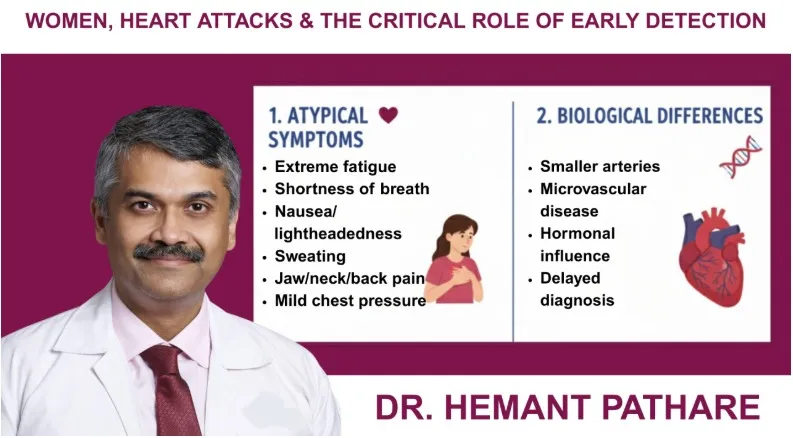
Chest pain is commonly associated with heart attacks, but women are far more likely to experience “atypical” symptoms that are subtle and easy to dismiss.
Common Heart Attack Symptoms in Women
- Extreme or unusual fatigue
- Shortness of breath
- Nausea, vomiting, sweating
- Jaw, neck, throat, upper back, or abdominal pain
- Mild chest pressure, fullness, or burning (not crushing pain)
Because these symptoms do not match the “classic” image of a heart attack, many women mistake them for stress, acidity, anxiety, or flu, leading to dangerous delays in treatment.
Biological & Anatomical Differences Matter
Heart disease progresses differently in women due to key biological factors:
1. Cardiovascular Structure
- Women generally have smaller hearts and narrower coronary arteries
- Blood vessel walls are often thinner and more sensitive to hormonal changes
2. Location & Nature of Blockages
- Men usually develop blockages in large coronary arteries
- Women are more prone to coronary microvascular disease, affecting tiny blood vessels
- Plaque in women is often diffuse and softer, developing gradually and causing less dramatic symptoms
3. Hormonal Influence
- Estrogen offers protection before menopause
- After menopause, declining estrogen sharply increases heart disease risk and changes symptom patterns
4. Neurological & Pain Perception
- Women may process pain differently or have higher pain tolerance
- Symptoms are often perceived as non-cardiac, delaying medical attention
Conditions That Can Mimic a Heart Attack in Women
Women are more likely to experience conditions that resemble heart attacks but involve different mechanisms:
- Coronary artery spasm (temporary vessel tightening)
- Coronary artery dissection (tear in the artery wall)
- Broken Heart Syndrome (Stress Cardiomyopathy)—a chemical heart attack without blocked arteries
These conditions further complicate diagnosis and require specialized clinical awareness.
Risk Factors Unique or More Relevant to Women
Beyond traditional risk factors, women face additional risks linked to reproductive and hormonal health:
- Gestational diabetes
- Preeclampsia
- Endometriosis (linked to significantly higher cardiac risk in younger women)
- Early menopause
- Autoimmune and inflammatory conditions
These factors are powerful predictors of future heart disease and must not be overlooked.
The Silent Nature of Heart Disease
Many heart conditions remain asymptomatic in early stages. This makes early detection the most effective tool for prevention.
Subtle Warning Signs to Watch For
- Persistent fatigue not relieved by rest
- Breathlessness during daily activities or while lying flat
- Palpitations or irregular heartbeat
- Swelling in legs, ankles, feet, or abdomen
- Digestive discomfort, nausea, or back pain—especially in women
Key Screening & Diagnostic Tools for Early Detection
Routine screening can detect heart disease years before a major event:
- Blood Tests: Cholesterol (LDL/HDL), triglycerides, blood sugar, CRP
- ECG / EKG: Detects rhythm abnormalities and past heart damage
- Echocardiogram: Evaluates heart structure, valves, and pumping function
- Stress Test: Assesses heart performance under exertion
- Coronary Calcium Score (CT Scan): Identifies early plaque buildup—even before symptoms
⚠️ Important note: Diagnostic thresholds (such as troponin levels) may differ between men and women, meaning some women may be underdiagnosed if sex-specific interpretation is not applied.
When Should Heart Screening Begin?
- From age 20: Routine monitoring of blood pressure, weight, and lifestyle
- 20s–30s: Cholesterol screening every 4–6 years
- After 40 or high-risk individuals: More frequent and advanced assessments
- Family history, diabetes, obesity, or pregnancy-related complications require earlier and closer monitoring
Technology Is Transforming Early Detection
The future of cardiovascular care is proactive and personalized:
- AI-driven ECG analysis can detect subtle patterns invisible to the human eye
- Genetic testing helps identify inherited cardiovascular risk
- Data-driven tools enable earlier intervention, targeted prevention, and better outcomes
