❤Heart health is not just about treatment — it’s about timely, precise decisions. In some patients, even after a successful heart bypass surgery, the heart may need a second intervention after 12-15 years, rarely earlier. This is where Redo-CABG (Redo Coronary Artery Bypass Grafting) becomes critical.
Redo-CABG is not a routine procedure. It represents advanced cardiac care, where experience, planning, and precision decide outcomes.

What Is Redo-CABG?
Redo-CABG is a repeat heart bypass surgery, performed when:
● Previously used vein graft conduits get occluded over time
● New lesions (blockages) develop in the coronary arteries which were normal at the time of original bypass
● Multiple in-stent blockages in patients who had earlier undergone CABG
Revascularisation surgery is directly linked to protecting the heart muscle and improving the quality of life.

⚠Why Is Redo Heart Surgery More Complex?
Unlike first-time bypass surgery, redo procedures involve:
● Dense Scar tissue around the heart and between heart and breast bone
● Existing functioning grafts that must be preserved (especially LIMA -LAD)
● Distorted anatomy
● Lower physiological reserve in v/o advanced age

🧭 This makes planning very important.
● Preoperative imaging-driven planning
● Safe re-entry strategy
● Peripheral cannulation readiness
● Functioning Graft preservation
● Minimal dissection philosophy
● Targeted revascularization
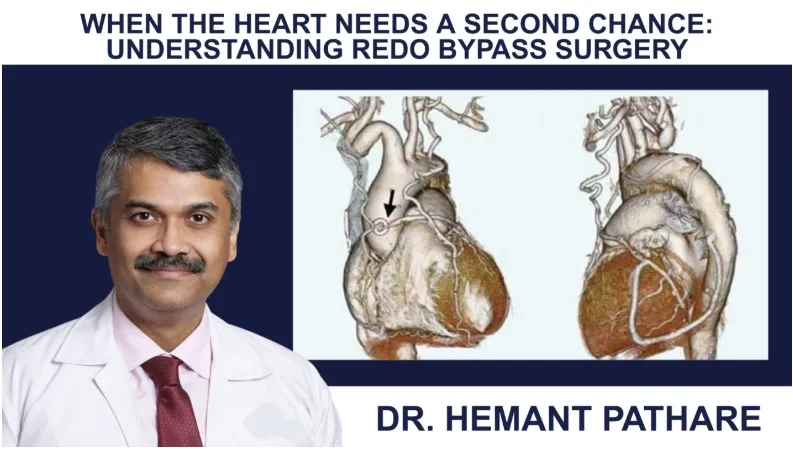
🖥Modern Redo-CABG relies heavily on advanced CT imaging of Chest
● For Checking the proximity of heart and grafts to sternum
● Maps LIMA and vein grafts
● Identifies high-risk re-entry zones
● Guides alternative approaches

🔄 What should be the cannulation strategy?
● Ideally, to perform surgery off-pump, but if the heart does not tolerate being lifted, then to do on-pump surgery. If very high risk, then initiate cardio-pulmonary before sternotomy if needed via the femoral or axillary artery, preferred

In cardiac care today, technology and expertise work together to reduce risk and improve safety.
My choice
● Prefer arterial conduits
● Avoid disturbing patent grafts, especially avoid clamping patent LIMA if possible
● Sequential grafting
● Composite graft strategies

⚖ Off-pump or on-pump surgery
● Off-pump reduces aortic manipulation
● On-pump offers hemodynamic stability
● Decision should be patient-specific
● Surgeon experience is key

🚑 Post operative challenges
● Bleeding
● Low cardiac output
● Arrhythmias
● Prolonged ventilation

🌍 What This Means for Patients & Healthcare Stakeholders
✔ Advanced heart care is evolving
✔ Repeat surgeries can be safe with the right expertise
✔ Precision-driven cardiac surgery saves lives
✔ Heart health requires long-term monitoring, not one-time treatment
❤ Final Thought
When it comes to the heart, second chances must be handled with extra care. Redo-CABG reflects how modern cardiac science combines experience, technology, and compassion to protect what matters most — the human heart ❤