
🩺 INTRODUCTION
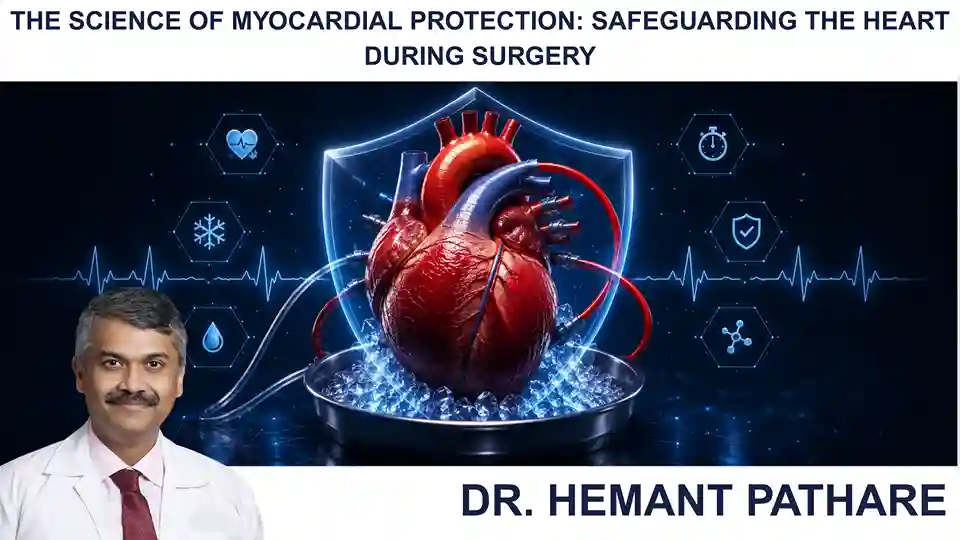
One of the most remarkable achievements in modern medicine is the ability to temporarily stop the human heart, repair it with precision, and restore it to life. Behind this extraordinary feat lies one of the most critical principles in cardiac surgery: myocardial protection.
To many, the idea of stopping the heart during surgery may seem unimaginable. Yet for cardiac surgeons, it is often an essential step that allows intricate procedures to be performed with precision and safety.
The challenge, however, is not simply stopping the heart. It is protecting the heart muscle while its normal blood supply is temporarily interrupted.
Every decision made during this period can influence how well the heart recovers once the operation is complete.
❤️ WHY THE HEART NEEDS PROTECTION
Unlike many other organs, the heart never truly rests.
Every second, it contracts tirelessly to pump oxygen-rich blood throughout the body. During cardiac surgery, when the heart is intentionally arrested to provide a still and bloodless surgical field, its demand for oxygen must be dramatically reduced while preserving the integrity of the myocardium.
Without effective myocardial protection, prolonged ischemia can lead to irreversible injury, impaired cardiac function, postoperative complications, and poorer patient outcomes.
The objective is simple in principle, yet remarkably complex in practice: preserve the heart while repairing it.
💉 THE ROLE OF CARDIOPLEGIA
At the center of myocardial protection is cardioplegia, a specialized solution that safely induces temporary cardiac arrest. It is a crystalloid or blood-based solution which contains large amounts of potassium to induce and sustain electromechanical arrest, magnesium and lignocaine to stabilize cell membranes, sodium bicarbonate to maintain pH, and mannitol to decrease cellular edema.
Delivered through the coronary circulation after cross-clamping the ascending aorta, cardioplegia given antegradely or retrogradely reduces the heart’s metabolic demands by halting electrical and mechanical activity. Most formulations are cooled to further decrease cellular oxygen consumption, allowing the myocardium to better tolerate the period of interrupted blood flow.
Over the years, cardioplegia has evolved considerably.
Today, surgeons may choose between blood or crystalloid cardioplegia, antegrade or retrograde delivery, and intermittent or single-dose strategies, depending on the patient’s anatomy, the planned procedure, and institutional expertise.
There is no universal solution. The most effective approach is one tailored to the individual patient and the complexity of the operation.
⏱️ EVERY MINUTE COUNTS
Successful myocardial protection extends far beyond the composition of the cardioplegia solution. The duration of aortic cross-clamping, the timing of repeated cardioplegia doses, myocardial temperature, electrolyte balance, and continuous assessment of myocardial perfusion all play a vital role in preserving cardiac function.
Even seemingly small variations in technique can have meaningful implications for postoperative recovery.
In cardiac surgery, meticulous attention to detail often determines the difference between a good outcome and an exceptional one.
🧬 THE SCIENCE BEHIND RECOVERY
Protecting the heart does not end when circulation is restored.
One of the greatest challenges is ischemia-reperfusion injury, the paradoxical damage that can occur when blood flow returns to previously oxygen-deprived tissue.
Modern myocardial protection strategies aim not only to minimize ischemic injury during surgery but also to reduce the cellular stress associated with reperfusion.
Advances in metabolic support, temperature management, antioxidant research, and pharmacological therapies continue to improve our understanding of how the heart recovers after surgery.
🚀 INNOVATION IS RESHAPING MYOCARDIAL PROTECTION
Research in myocardial preservation remains one of the most dynamic fields in cardiovascular medicine.
Novel cardioplegia formulations, improved myocardial cooling techniques, biomarker-guided protection strategies, ex-vivo organ perfusion technologies, and AI-assisted intraoperative monitoring are helping surgeons optimize outcomes with increasing precision.
At the same time, advances in minimally invasive and robotic-assisted cardiac surgery are driving new approaches to myocardial protection that are tailored to evolving surgical techniques.
Innovation is no longer focused solely on repairing the heart. It is equally focused on preserving its function.
🔮 LOOKING AHEAD
As cardiac surgery becomes increasingly personalized, myocardial protection is expected to evolve alongside it.
Future strategies may incorporate genomic profiling, metabolic phenotyping, real-time tissue oxygenation monitoring, and predictive analytics to individualize myocardial preservation for every patient.
Rather than relying on standardized protocols alone, tomorrow’s cardiac surgeons may tailor myocardial protection to each patient’s unique physiology and operative risk.
The heart may be temporarily still during surgery, but the science protecting it continues to move forward.
💭 FINAL THOUGHT
The success of cardiac surgery is often measured by what happens after the operation, how well the heart recovers, how quickly the patient heals, and how completely they return to their daily life.
Behind every successful procedure lies an often unseen commitment to protecting the myocardium during its most vulnerable moments.
Myocardial protection is more than a technical aspect of surgery. It is a reflection of the precision, planning, and scientific progress that define modern cardiac care.
Sometimes, the greatest achievement in cardiac surgery is not simply repairing the heart, but ensuring it is ready to beat stronger when the repair is complete.
❓ A QUESTION WORTH REFLECTING ON
As cardiac surgery continues to evolve, could the next major breakthrough lie not only in how we repair the heart, but in how effectively we protect it throughout the journey?
Perhaps the future of cardiac surgery will be measured not only by surgical precision, but by our ability to preserve every heartbeat before it begins again.
