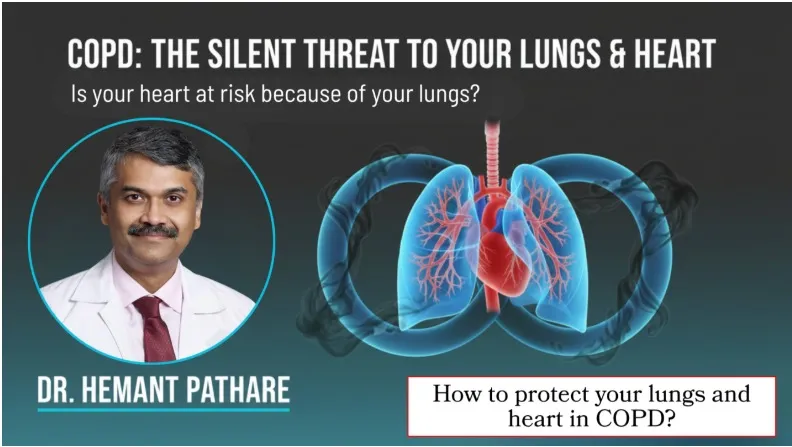
Chronic Obstructive Pulmonary Disease (COPD) is becoming one of the biggest silent health threats worldwide. It slowly damages the lungs, makes breathing harder over time, and often goes unnoticed until it becomes serious. In India, where pollution, smoking, and crowded living conditions are common, COPD affects millions and leads to a major health burden.
Understanding COPD early can save lives. This article explains what COPD is, how it harms your lungs and heart, why flare-ups are dangerous, what tests doctors use for diagnosis, and the treatments that can improve life. The goal is simple: help people spot the warning signs early, protect themselves, and breathe better for longer.
🌬 What Is COPD?
Chronic Obstructive Pulmonary Disease (COPD) is a long-term, progressive lung disease that makes it difficult for people to breathe. It happens because the airways and the air sacs inside the lungs become damaged, swollen, or blocked. Over time, this leads to reduced airflow in and out of the lungs.
COPD is not one single disease. It is an umbrella term that includes:
1️⃣ Emphysema
● The tiny air sacs (alveoli) in the lungs are damaged.
● Alveoli, lose their elasticity, Rupture and form larger sacs but with less total surface area.
● Because of this, oxygen cannot pass easily into the bloodstream.
● Main symptom: shortness of breath even during minimum activity.
2️⃣ Chronic Bronchitis
● Persistent cough lasting for at least 3 months in a year for 2 successive years for it to be called as Chronic Bronchitis
● The inner lining of the airways becomes inflamed and swollen.
● Thick mucus is produced, blocking airflow.
● Main symptom: long-term cough with mucus.
Many people have both conditions together in different proportions.

Why COPD Is a Big Concern in India
India has one of the highest COPD burdens in the world. This is due to smoking, pollution, dust, indoor smoke from burning wood, and occupational exposures.
Key Indian Statistics
● India carries 20% of the world’s population, but a much higher share of COPD cases.
● COPD accounts for 9–10% of total deaths in India.
● It makes up 50% of all chronic respiratory disease burden in the country.
● India contributes to over 20% of global COPD deaths.
These numbers show that COPD is not just a lung problem—it is a major public health challenge.
What Happens Inside the Lungs of COPD Patients?
COPD causes several structural and functional changes:
● Loss of elasticity of air sacs
● Narrowing and scarring of airways
● Thick mucus buildup
● Collapse and enlargement of alveoli
● Air trapping that makes breathing shallow and difficult
Over time, these changes worsen and cause exacerbations—sudden episodes of severe breathing difficulty.

⚠️ COPD Exacerbations: More Than Just Breathlessness
Exacerbations (flare-ups) make breathing suddenly worse and may require hospitalization. But the impact goes beyond the lungs.
Heart Risk After an Exacerbation
● Risk of heart attack doubles in the first 1–5 days.
● Risk of stroke increases by 40% in 6–10 days.
● Within 30 days of a severe exacerbation requiring hospitalization, risk of major heart problems increases 10 times.
This happens because COPD affects oxygen levels, increases inflammation, and puts extra pressure on the heart.

❤️ How COPD Affects the Heart
COPD and the heart are deeply linked:

1️⃣ Lung Inflammation → Body-Wide Inflammation
Inflammation in the lungs spreads through the bloodstream and can:
● Narrow blood vessels
● Forms plaques
● Increase chances of heart attack and stroke
2️⃣ Hyperinflation → Pressure on the Heart
Trapped air inside the lungs expands the chest. This:
● Externally Compresses the heart
● Limits its pumping ability
● Reduces exercise capacity
3️⃣ Low Oxygen Levels (Hypoxemia)
When lungs can’t transfer enough oxygen into the blood:
● Saturation of Oxygen in Blood becomes low
● Pulmonary vessels construct (tighten)
● Leads to pulmonary hypertension in the long term
● Over time causes right-sided heart failure
COPD is a lung disease that ultimately becomes a heart disease if not treated properly.
📋 Signs and Symptoms of COPD
Some early symptoms include:
● Persistent cough with thick mucus
● Shortness of breath while walking or climbing stairs
● Wheezing
● Feeling tired all the time
● Barrel-shaped chest
● Bluish coloration of nails
● Morning headaches
● Sudden weight loss
Symptoms become worse over time if untreated.
🔥 Major Causes of COPD
● Smoking
● Secondhand smoke
● Air pollution
● Dust
● Chemical fumes
● Occupational hazards (factory work, construction, mining)
● Genetic condition like Alpha-1 Antitrypsin deficiency
🧪 Tests Used to Diagnose COPD
Doctors use several tests to understand the condition:
● Spirometry – measures breathing capacity
● Pulmonary function tests
● Pulse oximetry – oxygen levels
● Chest X-ray / HRCT scan
● Blood gas test (ABG)
● Exercise testing
● ECG – heart function
● Blood tests
● Genetic testing (when required)
📏 Stages of COPD (Based on FEV1 Test)
● Stage 1: FEV1 ≥ 80%
● Stage 2: FEV1 50–79%
● Stage 3: FEV1 30–49%
● Stage 4: FEV1 < 30%
Lower FEV1 means more severe disease.
💊 How COPD Is Treated
There is no cure, but treatments reduce symptoms and prevent flare-ups.
Medical Treatment Options:
● Quit smoking
● Inhalers (bronchodilators + steroids)
● Nebulizers
● Supplemental oxygen therapy
● Pulmonary rehabilitation
● Antibiotics for infections
● BIPAP machine during severe attacks.
Surgical treatment options:
● Lung volume reduction surgery
● Bilateral Lung transplant in very advance options
