In preventive cardiac care, one truth reveals itself every single day: Heart disease rarely begins in the hospital — it begins in our habits.
Among all lifestyle risk factors, smoking and excessive alcohol consumption continue to be the most aggressive, preventable, and underestimated enemies of heart health. Their damage compounds silently over months, years, and decades—often becoming visible only after the first cardiac event.
Today, I want to unpack how these two behaviours impact the heart, and why prevention must start much earlier than treatment.
1. Smoking: A Direct Attack on the Heart
Every cigarette releases 7,000+ chemicals into the bloodstream.The harmful effects start within minutes, not months.
How Smoking Damages the Cardiovascular System
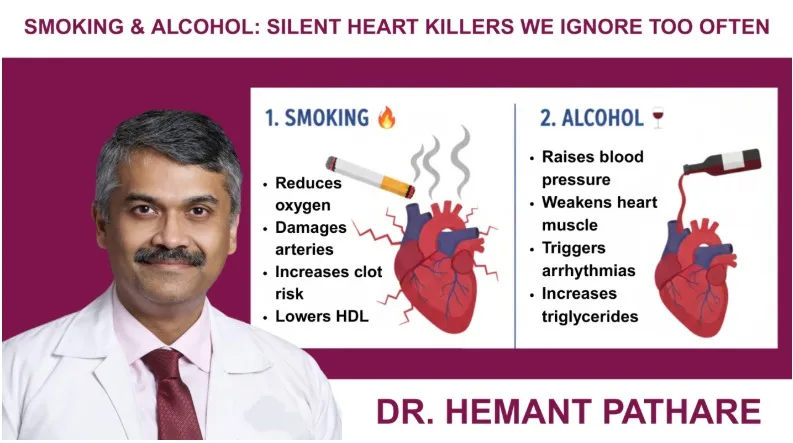
● Reduces oxygen supply, forcing the heart to pump harder
● Damages arterial walls, accelerating plaque and blockages
● Increases clot formation, raising the risk of heart attack and stroke
● Lowers HDL (good cholesterol), removing the heart’s natural protection
Smoking doesn’t just increase risk—it brings heart disease earlier and slows recovery after cardiac events.
One of the biggest myths?
“I only smoke socially” or “I smoke 1–2 cigarettes a day—so it’s fine.”
Clinically, this is far from true.
Even 1–2 cigarettes per day significantly raise the risk of a heart attack.
And even after quitting, it takes more than 2 years to approach the risk level of the general population.
2. Alcohol: A Slow, Misleading Cardiovascular Stressor
Alcohol’s danger is different — it’s culturally normalized, accepted, even celebrated.
That makes the transition from occasional to harmful far too easy.
How Alcohol Harms the Heart
● Raises blood pressure, damaging vessels over time
● Weakens heart muscles → leading to cardiomyopathy
● Triggers arrhythmias, especially atrial fibrillation
● Increases triglycerides, often unnoticed until routine tests
● Drives weight gain, compounding cardiac risk
To stay in the safe zone, consumption must be limited to:➡️ 2 pegs per WEEK (not per day)
The danger is not just the alcohol — fried snacks consumed along with drinks dramatically increase LDL cholesterol.
While red wine is often labelled “heart-friendly,” it offers benefits only in strict moderation due to antioxidant content.
Importantly: Patients with diabetes, hypertension, high cholesterol, or a strong family history should avoid alcohol entirely.
3. What Works: Building a Strong Prevention & Recovery Ecosystem
Preventive cardiology is not just advice — it requires structure, strategy, and sustained follow-up.
✔ 1. Establish a Cardiac Lifestyle Intervention Unit
A multidisciplinary program covering:
● Nicotine replacement therapy
● Behavioural and psychological support
● Stress management
● Relapse prevention strategies
✔ 2. Mandatory Tobacco & Alcohol Screening at Every OPD Visit
Every clinic touchpoint becomes an opportunity for early intervention.
✔ 3. Train Staff in Motivational Interviewing (MI)
Patients change when they feel understood, not judged.
MI significantly increases success rates for quitting smoking or
alcohol.
✔ 4. Build Follow-Up Support Systems
Because recovery is not a one-time prescription, it’s an ongoing journey.
Follow-up calls, reminders, counselling, and virtual check-ins reduce relapse and keep patients motivated.