
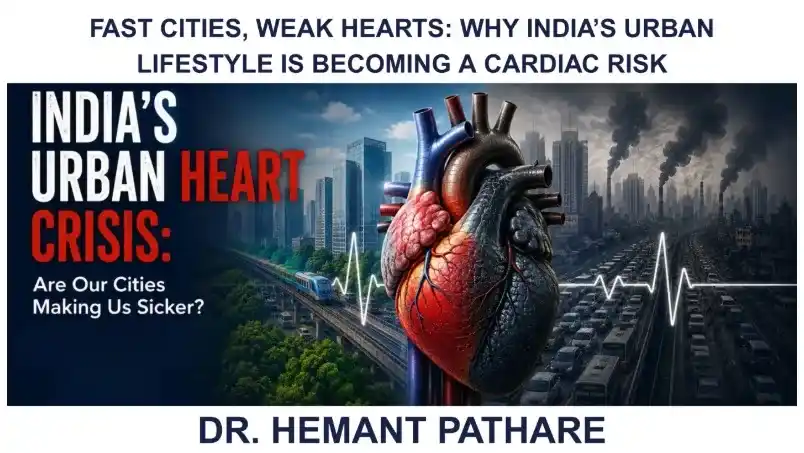
🌆 Introduction
India’s cities are growing faster than ever before. Towering skylines, expanding metro networks, demanding corporate cultures, and digitally connected lifestyles have transformed urban living into a symbol of ambition and success. From Mumbai and Delhi to Bengaluru and Hyderabad, modern city life now moves at relentless speed.
But beneath this rapid progress lies a growing health concern.
The same urban lifestyle that offers opportunity and convenience is also creating an environment where stress, pollution, poor sleep, sedentary work routines, unhealthy eating habits, and chronic exhaustion have become part of everyday life. Increasingly, cardiologists and cardiothoracic surgeons are witnessing younger patients—many in their 30s and 40s—developing hypertension, diabetes, coronary artery disease, and even suffering heart attacks.
What makes this crisis particularly alarming is that many of its causes are deeply embedded in the structure of modern city living itself. Long commutes replace physical activity, screen-heavy jobs reduce movement, stress is normalized as productivity, and air pollution silently impacts cardiovascular health with every breath.
Unlike infectious illnesses, heart disease develops gradually and often without warning. By the time symptoms appear, significant damage may already exist.
India’s growing urban heart crisis is therefore not just a medical issue—it is a lifestyle and public health challenge. As cities continue to expand, an important question emerges: are our urban environments truly improving quality of life, or are they quietly increasing the risk of cardiovascular disease?
🌩️ The Urban Environment: A Perfect Storm for Heart Disease
Modern urban life has created a health environment unlike anything previous generations experienced. While cities have improved access to opportunities, technology, and healthcare, they have also introduced a combination of lifestyle and environmental stressors that continuously burden the cardiovascular system.
Today’s urban population is exposed to multiple risk factors simultaneously:
- Air pollution
- Chronic stress
- Poor sleep
- Long working hours
- Sedentary routines
- Unhealthy diets
- Reduced physical activity
Together, these factors place the body in a constant state of physiological strain, increasing the risk of hypertension, diabetes, obesity, and heart disease.
The modern city routine itself has become highly sedentary. Many professionals spend long hours seated at desks, commuting through traffic, or working on screens with minimal physical movement.
At the same time, stress has become deeply normalized. Competitive work environments, financial pressures, digital overload, and the expectation of constant productivity keep the body under prolonged mental and hormonal stress, directly affecting heart health.
Sleep deprivation and unhealthy eating habits further intensify the problem. Late-night schedules, irregular meals, processed foods, and excessive sodium and sugar intake contribute to inflammation and poor metabolic health.
What makes heart disease especially dangerous is its silent progression. Unlike infectious illnesses that show immediate symptoms, cardiovascular damage develops gradually over years.
In many ways, cities have transformed human behavior faster than human physiology can adapt.
🌫️ Pollution: The Invisible Cardiac Threat
When discussing pollution, respiratory diseases often dominate the conversation. However, mounting evidence shows that air pollution is equally dangerous for the heart.
Fine particulate matter (PM2.5), vehicle emissions, industrial pollutants, and construction dust enter the bloodstream through the lungs, triggering:
- Systemic inflammation
- Oxidative stress
- Endothelial dysfunction
Over time, these processes accelerate plaque formation in arteries and increase the risk of:
- Hypertension
- Stroke
- Heart attacks
For urban residents, exposure is nearly constant:
- Traffic congestion
- Industrial emissions
- Indoor air pollution
- Poor ventilation in commercial spaces
The heart, unlike the lungs, cannot “avoid” polluted blood. Every heartbeat becomes part of the exposure cycle.
In densely populated Indian metros, pollution is no longer just an environmental concern—it is a cardiovascular emergency.
😰 Stress: The Most Normalized Health Hazard
Urban stress has become so routine that many individuals no longer recognize it as harmful.
- Deadlines
- Financial pressure
- Job insecurity
- Digital overload
- Traffic fatigue
- Lack of work-life balance
Together, these factors keep the body in a prolonged state of physiological alertness.
Chronic stress elevates cortisol and adrenaline levels, increasing:
- Blood pressure
- Heart rate
- Inflammatory activity
Over time, this continuous hormonal activation damages blood vessels and weakens cardiovascular resilience.
What makes stress particularly dangerous is its invisibility.
- Long working hours are praised as dedication.
- Sleep deprivation is normalized as ambition.
- Burnout is mistaken for productivity.
But the cardiovascular system does not differentiate between emotional stress and physical danger.
💻 Sedentary Work Culture: Sitting Is the New Smoking
India’s urban workforce is increasingly desk-bound. Technology-driven jobs, remote work culture, and prolonged screen exposure have drastically reduced daily physical movement.
Many professionals spend:
- 8–12 hours sitting
- Minimal time outdoors
- Little or no structured exercise
- Extended periods in front of screens
This sedentary pattern contributes to:
- Obesity
- Diabetes
- High cholesterol
- Poor circulation
- Elevated blood pressure
The modern urban paradox is striking: People are mentally exhausted, yet physically inactive.
Even individuals who appear outwardly healthy may possess hidden metabolic risks due to inactivity and poor cardiovascular conditioning.
🍔 Food Convenience vs Nutritional Health
Urbanization has reshaped eating habits.
Fast food, processed meals, sugary beverages, late-night eating, and irregular meal timings have become deeply integrated into city life.
Highly processed diets contribute to:
- Obesity
- Insulin resistance
- Hypertension
- Elevated cholesterol
- Chronic inflammation
Additionally, stress-induced eating and emotional consumption patterns further compound cardiac risk.
Ironically, despite greater access to information, many urban populations are consuming diets that are progressively less heart-friendly.
😴 Sleep Deprivation: The Overlooked Cardiac Risk
Sleep is often sacrificed first in high-performance urban environments.
Late-night work schedules, excessive screen exposure, shift duties, social media engagement, and long commuting hours disrupt circadian rhythms and reduce sleep quality.
Chronic sleep deprivation is closely associated with:
- Hypertension
- Arrhythmias
- Obesity
- Increased cardiovascular mortality
The heart requires recovery time just as muscles do. Persistent sleep disruption prevents adequate cardiovascular restoration and increases long-term strain on the circulatory system.
In many metro cities, exhaustion has become a lifestyle identity rather than a medical warning sign.
👨⚕️ Why Younger Indians Are Increasingly at Risk
One of the most concerning trends in modern cardiology is the rising incidence of heart disease among younger adults.
Several contributing factors include:
- Processed diets
- Work-related stress
- Smoking and vaping
- Sleep deprivation
- Sedentary childhoods
- Early-onset diabetes
- Lack of preventive screenings
Genetics may predispose individuals to cardiovascular disease, particularly in South Asian populations, but urban lifestyle often accelerates the timeline dramatically.
Heart disease is no longer an “older person’s illness.” Increasingly, it is affecting individuals during their most productive years.
🛡️ Prevention Cannot Wait for Symptoms
Cardiovascular disease often develops silently. Many patients experience no warning signs until a serious cardiac event occurs.
This is why preventive cardiology has become more important than ever.
Urban populations should prioritize:
- Regular cardiac screenings
- Blood pressure monitoring
- Diabetes evaluation
- Lipid profile assessments
- Daily physical activity
- Stress management
- Adequate sleep
- Smoking cessation
- Heart-conscious nutrition
Small, sustainable lifestyle modifications can significantly reduce long-term cardiovascular risk.
The goal is not merely extending lifespan, but preserving quality of life.
🏥 The Role of Awareness in Modern Cardiac Care
Cardiothoracic surgery represents one of the most advanced and life-saving fields in modern medicine. From bypass surgeries to valve replacements and minimally invasive procedures, surgical innovation has dramatically improved survival rates and quality of life.
However, the future of heart health cannot depend on surgical excellence alone.
A large percentage of cardiovascular disease is linked to preventable lifestyle and environmental factors.
Healthcare today must move beyond treating illness after it appears and focus more strongly on:
- Public awareness
- Early detection
- Healthy nutrition
- Physical activity
- Stress management
- Preventive screenings
As Indian cities continue to expand, conversations around heart health must also extend beyond hospitals and clinics.
- Public fitness infrastructure
- Pollution control
- Workplace wellness policies
- Mental health awareness
- Healthier urban environments
all play a critical role in combating cardiovascular disease.
The growing cardiac crisis in urban India is therefore not just a medical issue—it is a societal challenge shaped by how people live, work, travel, eat, and cope with modern life.
💭 Closing Thought
Modern cities were built to symbolize:
- Growth
- Speed
- Progress
- Opportunity
Yet hidden beneath this fast-moving urban success story is a quieter reality: the lifestyles shaping modern cities are also reshaping human health—particularly the health of the heart.
The greatest danger of urban heart disease is not that it appears suddenly, but that it develops silently through everyday routines that have become normalized.
- Long working hours
- Traffic congestion
- Chronic stress
- Screen-heavy lifestyles
- Processed food habits
- Poor sleep
- Lack of physical activity
Over time, these patterns accumulate into serious cardiovascular risk.
What is especially alarming is that heart disease is increasingly affecting younger populations. Individuals in the most productive years of their lives are now facing hypertension, diabetes, arterial blockages, and cardiac emergencies far earlier than previous generations.
As India continues to urbanize at an unprecedented pace, the conversation around heart health must move beyond treatment alone.
Advanced cardiac care remains essential, but the future of cardiovascular health will depend equally on:
- Prevention
- Awareness
- Early screenings
- Healthier workplaces
- Cleaner air
- Stress management
- Sustainable lifestyle choices
Ultimately, the challenge before modern society is not whether cities should continue to grow but whether they can grow in ways that support human well-being alongside economic progress.
Because in the race to build smarter, faster, and more efficient cities, we must ensure we are not silently weakening the hearts that keep them alive.