May 20, 1999. Northern Norway.
Anna Bågenholm was 29 years old, a young trainee doctor pursuing radiology, was spending a day skiing with friends. She was e regular skier. The crisp Arctic air, the pristine snow, the thrill of speed— all the reasons why she loved to ski.
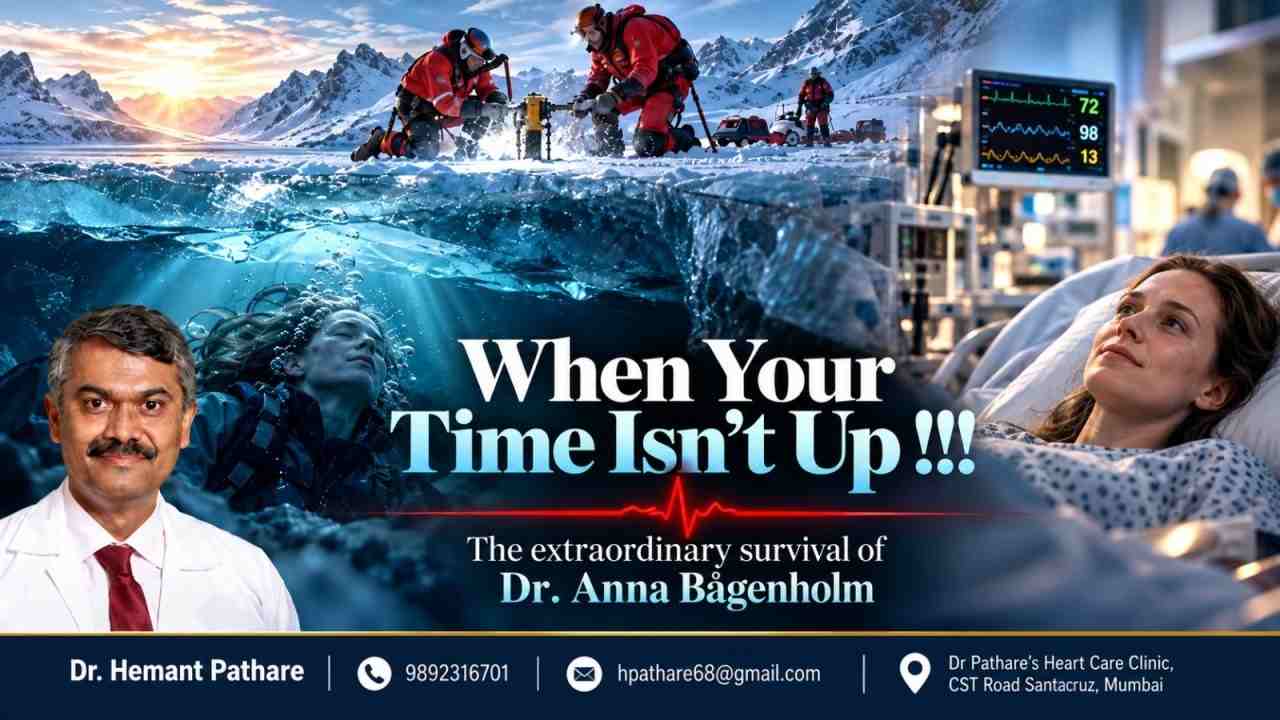
She started her descent down the hill, gradually picking up speed. Carving turns.… and then she tumbled. Slid. And plunged headfirst through the frozen surface of a mountain stream.The ice sealed shut above her.
Anna vanished into darkness.Her friends saw her disappear. They ran to the spot, dropped to their knees, clawed at the ice. But the current beneath had already dragged her away. They couldn’t see her. Couldn’t reach her.
However, beneath the ice, Anna was conscious. Completely, terrifyingly aware of what was happening.The cold water gripped her like a vice and the current pulled her deeper under the solid sheet of ice. She pounded on the ice above her with freezing fists. Nothing. It wouldn’t break. Wouldn’t crack. The surface was too thick, the current too strong.
She knew she was drowning. Panic flooded her system. Her medical training screamed statistics at her: minutes until unconsciousness, minutes until brain damage, minutes until death. She searched desperately for any way out.
Then—incredibly—she found a pocket of air lodged in a tiny space between ice and rock. Barely big enough for her nose and lips.Anna tilted her head back into that impossible pocket and gasped. Air. She could breathe temporarily.She wedged herself into place with fingers already going numb. She clung there in absolute darkness. Breathing in tiny, desperate gasps. Knowing that her friends were above, knowing they were trying to reach her, knowing that help would come.
Forty minutes she survived like this with her core temperature plummeting. Hypothermia setting in. Her fingers losing their grip on the rocks. Her body beginning to shut down, system by system, organ by organ and finally Anna’s heart stopped beating.
Medically, clinically, legally—she died trapped Under the ice. Above the ice a mountain rescue team arrived with shovels, ice picks, chainsaws. They cut through the ice. They pulled her out….eighty minutes after she’d fallen through.When they lifted Anna’s body to the surface, there was no pulse. No breath. No warmth. Her skin was gray, almost blue. Her pupils were fixed and dilated. Her body temperature had fallen to 13.7 degrees C.
That’s the lowest core body temperature ever recorded in a surviving human being In all of medical history.
The rescue team began CPR anyway and loaded her into their helicopter to fly to University Hospital in Tromsø. And when the emergency room doctors examined her, they saw exactly what the rescue team had seen: a corpse.
Some doctors whispered it: “There’s nothing left.”
Brain cells die after four to six minutes without oxygen. Anna had been without a heartbeat for at least forty. The math was simple and cruel. Even if they could restart her heart, they’d be bringing back a body without a functioning brain.
But a few doctors refused to give up.
Emergency medicine has an old rule, forged from cases just like this one: “You’re not dead until you’re warm and dead.”
Hypothermia does something extraordinary to the human body. When your core temperature drops, your metabolism slows dramatically. Your brain requires less oxygen. Your cells enter a kind of suspended animation. It’s like hitting pause on dying.
Anna was so cold she was essentially frozen. And frozen cells don’t decay. They wait. So the medical team made a decision. They would warm her up. Very very Slowly. Carefully. And only then would they declare her dead.
They connected Anna to a cardiopulmonary bypass machine—a heart-lung machine normally used during cardiac surgery. It would circulate her blood outside her body, warm it degree by degree, and pump it back in. Essentially, they were using a machine to do what her heart could no longer do.
Hours passed.
Her temperature crept upward degree by degree.
The team monitored for any sign of cardiac activity. After nine hours of mechanical circulation and gradual rewarming, something impossible happened.A flutter. On the cardiac monitor.Then another.Then a beat. Weak. But real.Anna’s heart restarted.
The team could barely believe it. After nine hours of clinical death, after eighty minutes under ice, after hypothermia that should have killed her ten times over—her heart was beating again.
But the real test would come later. Would her brain work? Would she wake up? Would there be anything left of the person who’d gone skiing that morning?
Days passed. Anna remained in a coma. The medical team ran tests, scans, assessments. They waited.Then her eyelids fluttered.She opened her eyes.
Weeks later, she spoke. Formed sentences. She recognized her family. Remembered who she was.
The neurological examinations came back one by one. Memory: intact. Cognition: intact. Motor function: intact. Speech: intact.
Her brain had suffered no damage.
After eighty minutes under ice, forty of them clinically dead, with a core body temperature of 13.7°C, Anna Bågenholm had survived with her mind completely untouched.
Only her hands and feet showed injury—frostbite damage from the prolonged exposure. She would need months of rehabilitation to regain full use of them. But her brain? Perfect.
The medical community was stunned. Her case was published in The Lancet, one of the world’s prestigious medical journals. It became the most extreme case of accidental hypothermia survival ever recorded. Textbooks were rewritten. Treatment protocols were revised.
“You’re not dead until you’re warm and dead” became official medical guidance worldwide. Because of Anna Bågenholm, countless hypothermia victims who would have been declared dead are now given a chance. Resuscitation efforts continue longer. Aggressive rewarming becomes standard practice.
She changed medicine simply by surviving.
But Anna’s story doesn’t end with her recovery.
She finished her medical training. Completed her radiology residency.
And then she made a choice that still gives people chills: she returned to work at the University Hospital of North Norway in Tromsø.
The same hospital that had resuscitated her.
The same hallways she’d been wheeled through as a corpse.
The same machines that had restarted her heart.
But this time, she wore a white coat.
Dr. Anna Bågenholm. Radiologist. Walking the floors where she’d died and been reborn, now saving other lives.
She passes the cardiac unit sometimes. Sees the bypass machines that gave her a second chance. Works alongside colleagues who helped resurrect her. And every day, she carries the knowledge of what it means to come back from death.
Anna spent forty minutes fighting to breathe in darkness. Forty minutes clinically dead with no heartbeat. Eighty total minutes trapped under ice in sub-zero water.
And she lived.
Not just lived—she came back whole. Came back to finish her training. Came back to help others.
Her story proves something that seems impossible: sometimes death isn’t final. Sometimes survival is just waiting on the other side of warming. Sometimes the human body can endure conditions that should absolutely, definitively kill it.
And sometimes, against every odd and every medical prediction, the person who shouldn’t have survived comes back to save others.
Anna Bågenholm didn’t just cheat death.
She came back to fight it ❤️
